Sleep Your Way to Better Performance: What Every Professional Needs to Know with Michele Kreuzer
Episode 49
What if the thing hurting your performance, your patience, and your focus at work isn't your workload, it's your sleep?
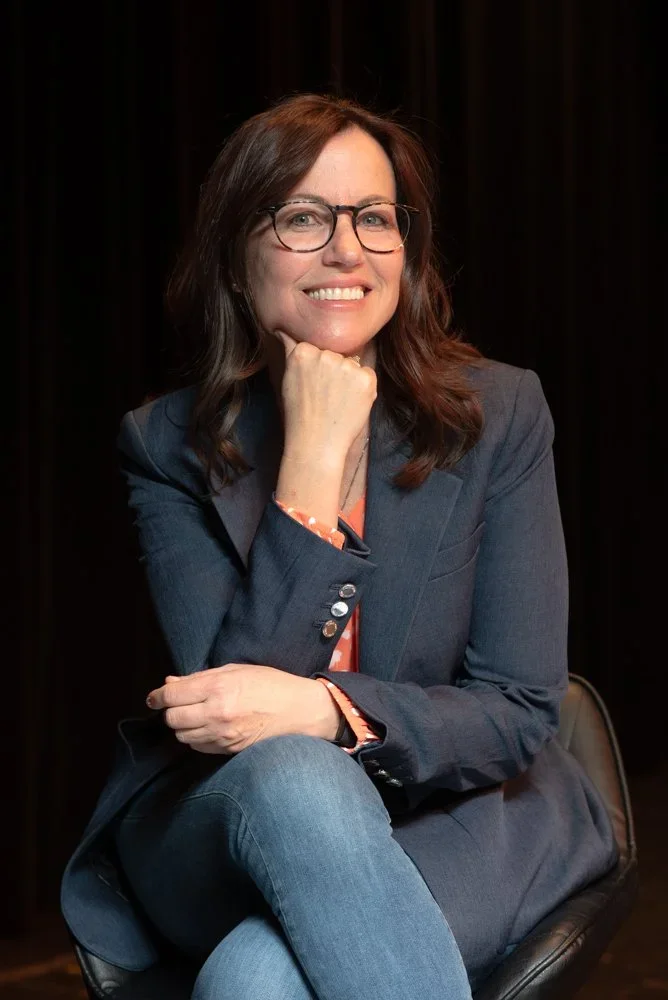
In Episode 49 of The People Success Circle, I sit down with Michele Kreuzer, a Certified Behavioral Sleep Specialist, to talk about sleep and workplace performance, and why it's one of the most overlooked levers professionals have. Michele shares her own journey from special education teacher to sleep expert, and walks me through the science, the habits, and the mindset shifts that can help you finally get the rest you need. Keep reading for practical strategies you can start using tonight.
In this episode of The People Success Circle, I explore the following:
I trace how Michele's work with children and families led her to discover the ripple effect poor sleep has on behavior, performance, and wellbeing
I learn why the way we think and talk about our sleep has a direct effect on how well we actually sleep
I explore what insomnia really looks like, and why so many people don't realize they have it
I cover the dangers of clock-watching in the middle of the night, and the one simple habit that can help
I ask Michele to explain CBTI (Cognitive Behavioral Therapy for Insomnia), how it works, and why just six to eight sessions can change everything
I dig into the daily habits that either help or hurt sleep and workplace performance, from meal timing and exercise to light exposure and alcoholI ask what leaders can do to model healthy sleep boundaries for their teams
I share why one in three people in your workforce are sleep deprived right now, and what to do about it
🎧 Tune in or keep reading to walk away with practical insights you can apply immediately—for yourself or the people you lead.
🔗 Helpful Links
🌐 Michele Kreuzer Links:
Website: michelekreuzer.com
LinkedIn: https://www.linkedin.com/in/michele-public-speaker/
🌐 Mindy’s website for business consulting: https://www.limerockcareerco.com
🎧 Listen to the podcast on Spotify, Apple Podcasts
Episode 49: Watch or Listen
Key Takeaways From Episode 49
How You Talk About Your Sleep Changes How You Sleep
One of the most striking things Michele shared is that worrying about sleep is often what disrupts it. The moment you start thinking, "I have to sleep tonight, how am I going to function tomorrow," you create what she calls hyper arousal, which makes falling back asleep even harder. Her advice: stop clock-watching. Turn your clock around so you're not tracking every hour you're awake, and reframe your only job in that moment as simply resting, not forcing sleep.
What Insomnia Actually Looks Like
A lot of people, myself included, assume insomnia only means trouble falling asleep. Michele broke down three common patterns: falling asleep fine but immediately spiraling into replaying the day, waking around 2 or 3 a.m. and struggling to fall back into deep sleep, and waking up hours before the alarm with no ability to drift off again. All three count as insomnia, and all three are more common, and more fixable, than most people realize.
CBTI: A Short-Term Fix for a Long-Term Problem
CBTI, or Cognitive Behavioral Therapy for Insomnia, typically takes just six to eight sessions and focuses on three things: your sleep drive (what you do during the day), your circadian rhythm (largely shaped by light and food timing), and your thoughts and beliefs about sleep itself, which Michele says are usually the hardest to change. The goal of CBTI is that you eventually won't need it anymore. You leave with a personal playbook for what to do the next time insomnia shows up.
What Leaders Can Do to Protect Their Team's Sleep
Michele's number one stat for leaders: roughly one in three people in your workforce are sleep deprived right now, and most are hiding it. Modeling matters here. That means not normalizing "I only got four hours but I'm fine," not expecting replies to late-night messages, and even following up the next morning with something as simple as, "Thanks for waiting until this morning to respond." Small signals like that tell your team good sleep boundaries are actually welcome, not just tolerated.
🎧 Listen to the full episode of The People Success Circle for more practical insights and leadership strategies you can start applying right away.
Read the full transcript
Mindy: Welcome to this week's episode of the People Success Circle podcast. I have a special guest today — her name is Michele Kreuzer, and Michele is a sleep expert. As you know, this podcast is about the people side of the business, and when I think about that as a leader and as a professional in the workplace, I think about how the actions we take affect how we show up at work. This was just a natural topic that fits into what I believe is important for the people side of the business. Michele, welcome, I'm so glad you're here.
Michele Kreuzer: Thank you for asking me to be a guest.
Mindy: I'm very interested in the whole person when it comes to how we show up in life, whether at work or with our families, so when I started learning more about what you do, it seemed like a natural fit. Michele, tell us how your career evolved into becoming an expert on sleep.
Michele Kreuzer: So I was a special education teacher for 20 years, and I became a BCBA — a board certified behavior analyst, or behavior specialist. I was working with children with common but difficult behaviors, and with their parents, teachers, and coaches on how to build appropriate behaviors and help the child communicate better. I noticed how sleep impacted that. When I went off on my own and got to know the families better, I noticed that even when everything was going as planned and the behavior strategies were working, a few nights without sleep threw everything off. It was a ripple effect — it wasn't just the child's behavior at home, it bled into school and academics, and the parents weren't sleeping either and were losing patience. I thought, I know all these behavior strategies, but I don't know what to do when the child isn't sleeping. So I went back to school and learned what impacts a child's behavior around sleep, and how to help parents teach their child to fall asleep independently.
The craziest thing happened — my own sleep started to improve. I'd always thought, I'm just not a good sleeper, I just don't sleep very long, that's just me. And I realized I could change my behaviors, thoughts, and beliefs about my sleep in order to improve it. Parents started saying, "I'm glad you helped my child, but now can you help me?" I love education and learning, and I thought, I think I can do that. There's so much to learn about sleep, and that's the snapshot of what led me here.
Mindy: So tell me what your business looks like today with your consulting.
Michele Kreuzer: With adults, I work with people who have insomnia, using something called CBTI — cognitive behavioral therapy for insomnia. When I wasn't sleeping in my 40s, I went to the doctor and got offered Trazodone, a sleeping pill, that kind of thing. It wasn't until I went back to school that I heard of CBTI, which is about changing our behaviors and our thoughts and beliefs about sleep, because those greatly impact how we sleep. That's the adult side. I still work with parents, though less often now, helping them teach their child to fall asleep independently. But honestly, my favorite thing, I think it's the teacher in me, is workshops and speaking events, where I can talk to groups of people at conferences about not just the impact of sleep, but what we can actually do about it — the how, the why, all of it.
Mindy: I've never heard of CBTI, and I definitely want to unpack that. But something you already said got my attention — how we talk to ourselves about sleep impacts how we sleep. Like saying, "I'm just not a good sleeper," or "I have insomnia." I think a lot of people accept that as just who they are, with nothing they can do about it. What would you say to someone who says that?
Michele Kreuzer: Our minds are powerful, and our thoughts are powerful. If you spend the day telling everyone, "I didn't sleep well, I feel awful, I never sleep well," and then as bedtime gets closer you're thinking, "Please let me sleep tonight, how am I going to function tomorrow" — when we start worrying about our sleep, that creates hyper arousal, and then we don't sleep. That's exactly why clock-watching in the middle of the night is so damaging — you wake up, look at the clock, see it's two in the morning, and think, "I knew this was going to happen, I knew I wasn't going to sleep through the night."
What I didn't know at the time is that waking up in the middle of the night is completely normal — we all do it, even people who think they don't. But the moment we get upset that we're awake, that's what triggers the hyper arousal, and we need to be relaxed in order to fall back asleep. So the worst thing you can do is keep clock-watching, thinking, "an hour went by, I have this thing to do tomorrow, I'm going to be a mess." Those thoughts really wreak havoc on our sleep.
Mindy: I am so guilty of that. Even just knowing consciously that it's taking me longer to fall asleep than I want, I start worrying, thinking tomorrow is going to be really hard — and I get anxious instead of focusing on what I can do to relax.
Michele Kreuzer: Absolutely. For clock-watchers, I tell them: you do not need to know what time it is in the middle of the night. Turn your clock around. That one thing can help, because if your alarm hasn't gone off yet, you don't need to be up. It's really difficult for people who've struggled with insomnia for months or years to change that thought process, so it's about changing little bits at a time — reminding yourself, "my only job right now is to rest." Catching those spiraling thoughts and asking, how many times have I had an occasional poor night's sleep and still gotten by? I've done it before, I can do it again, I'm going to be okay. It's really about how you'd talk to a best friend, plus a few tricks for distracting your mind, but the biggest thing is catching the thought and reframing it.
Mindy: That reminds me of the quote about having a hundred percent track record of surviving hard days. I carry that same feeling — "I'm speaking on stage tomorrow, I must get sleep," using that exact language, "I have to, I need this." But like you said, that doesn't guarantee tomorrow will be a bad day.
Michele Kreuzer: Exactly, and the more we try to force sleep, the more it eludes us. You can't force yourself to fall asleep. The more desperate we feel, the less likely it is to happen.
Mindy: That makes sense. So let's talk about the effect of sleep, positive or negative, on our performance as an employee.
Michele Kreuzer: It shows up everywhere. I heard this once on a podcast and it stuck with me: sleep is like a Mad Libs puzzle, you can say "blank impacts sleep" and "sleep impacts blank," because it touches everything. If you're not sleeping, there are more errors, mistakes, missed emails. Stress feels bigger — sleep and stress are interesting because stress impacts sleep, but not sleeping also makes stress feel so much larger and harder to handle. You'll notice you're less patient, sometimes just internally, and sometimes when you're really sleep deprived it's harder to hide that impatience. Have you ever responded to something and thought, whoa, those were some big emotions that didn't match what was actually going on?
Mindy: Yes, definitely. Even with parenting — I'll lose my cool or not say something as kindly as I usually would, and in hindsight it often comes back to how prepared I was for the day, not necessarily anything the other person did.
Michele Kreuzer: Absolutely, and all of this happens both at home and at work, that professional and personal overlap. Have you ever been really busy, burning the candle at both ends, and then you get sick and think, "I don't have time to be sick right now"? Our immune system takes a hit too when we're not sleeping. It really does affect our mental, physical, and emotional health. And sometimes, I hate to say this, but people's chronic five or six hours becomes their "normal," so they don't realize how much it's actually impacting them because they have nothing to compare it to. I spoke with a nurse once who said that when she got off shift work, it was like she could see color again. She hadn't realized how much she'd been missing. That was eye-opening.
Mindy: So if someone listening is thinking, "that's me, I sleep five or six hours and I think I'm doing fine," what would you say to them?
Michele Kreuzer: I'd probably ask how many hours they sleep when they're on vacation, when there are no demands, no alarm clock, nowhere to run to. If they say, "well, on vacation I sleep about seven hours," that's their body telling them what it actually needs.
Mindy: I love that as a self-assessment. I do think there are people, my husband is one of them, who genuinely function on five hours. So walk us through how someone can self-assess whether their sleep is really enough.
Michele Kreuzer: Seven to nine hours is the general recommendation. There is a very small percentage of people who can truly get by on six hours and be okay. Five hours, I haven't seen research or met anyone who's genuinely fine on that. The other thing I look at is whether there's a night here or there where it catches up and someone crashes for eight hours — that's a good indicator their body isn't actually getting what it needs on five.
With insomnia specifically, I didn't think I had it, even though I did, because I fell asleep just fine — and that's what so many people tell me, "I don't have insomnia because I fall asleep fine." Insomnia shows up differently for different people. One version: you're exhausted, you can't wait for bed, your head hits the pillow, and immediately your mind starts racing through everything you should have done. Another version, which was me: falling asleep fine, then waking around 2:30 or 3 a.m., drifting in and out, and not getting back into true deep sleep until right before the alarm goes off. The hardest version is the early-morning wakers — people who go to bed fine, say around 10:30, but wake up around 4 a.m. and simply can't get back to sleep.
Mindy: I know so many people in that club. If someone is a chronic early riser, what's your advice — is it as simple as going to bed earlier?
Michele Kreuzer: Sometimes, but not always. What I have anyone do, and this is something you could try at home, is start recording your sleep. When did you go to bed? Did you nap during the day? Did you wake up in the night, and what did that look like? People often say, "wait, Michele, you don't want me looking at a clock, but you're asking me to track this?" It's a fair question. Basically, you're learning your body — roughly guessing, "I think I went to bed at ten, woke up once or twice, maybe for half an hour, maybe two hours." You're recording it all, including what time you actually got out of bed, because sometimes people are in bed for seven hours but only sleeping five.
The bigger principle is: don't stay in bed while you're awake. If you've been awake for about half an hour and can't fall back asleep, get up, and keep the lights as dim as possible, because light tells your brain it's time to wake up. That's the other question I'd ask an early riser — what do you do when you wake up? If the answer is, "I give up, go to the kitchen, turn the lights on, and get coffee," you've just sent your brain a clear signal that it's time to be awake.
Mindy: So really collecting the data on your own patterns. I have to ask — what's your take on sleep trackers?
Michele Kreuzer: Mixed feelings, depending on how someone uses it. If someone's Whoop or Apple Watch tells them they're not getting deep sleep and that information is causing them stress or anxiety, I'd say ditch it, because you're fueling the exact hyper arousal that hurts sleep. But if someone notices, "when I exercise, I sleep better," and tracks that pattern, that's fantastic, track the behaviors that are actually influencing your sleep. One caveat: these devices are quite good at tracking sleep versus wake, but not nearly as reliable at tracking sleep stages, like deep sleep, light sleep, and REM. I wouldn't put a lot of weight on that specific data.
Mindy: That's helpful context. I wear an Aura Ring, and one thing that's been glaringly obvious is that even one glass of wine affects my sleep. It's made me think about what I can do differently before a big day — for me, that's no alcohol, and trying to get some exercise, though I'm not a weightlifter, more Pilates, yoga, or a good walk.
Michele Kreuzer: I love that. The only thing I'd add is that meal timing matters just as much. Restrictive or intermittent fasting has gotten a lot of attention lately, but not eating within two to three hours of bed is just as important as not drinking right before bed.
Mindy: I didn't realize that to this extent. What other small things can professionals do to consciously improve tonight's sleep if they need it?
Michele Kreuzer: As soon as you wake up, get out of bed, avoid hitting snooze, because it just leaves you groggy. Get sunlight, it's the fastest way to tell your brain it's time to wake up, gives you that shot of cortisol, and turns off melatonin, which helps regulate your rhythm later. The more consistent you can be with sleep, exercise, and food timing, the better, because every organ and cell in your body runs on its own clock, not just the brain's circadian rhythm.
So say it's eight at night and you're starting to wind down, which is important, because it signals your brain to start releasing melatonin and preparing the rest of your body for sleep. But if instead you realize you barely ate dinner and decide to eat a big meal late, your digestive system revs back up right when the rest of your body is trying to quiet down — and that affects other organs too.
Mindy: I had genuinely never thought about it that way, all the different parts of the body contributing to sleep. Does a late-night snack count the same way?
Michele Kreuzer: It depends on the size — a couple of pretzels is going to be very different from a full plate of chicken enchiladas.
Mindy: That makes sense. I really hadn't thought about waking up a part of your body that's usually winding down at that point, but it clicks now. So when you speak at organizations, walk me through what you cover.
Michele Kreuzer: It really depends on the audience, so I always ask whoever's booking me: who's the audience, what's the message, what's the specific topic you want covered. With coaches, I've spoken about sustaining presence during exhaustion. I've spoken to college students, parents, and teachers about stress and sleep. Most recently I spoke to snow and ice removal companies about the cost of drowsy driving, which is one of my favorite talks, because it's genuinely scary. Our brains can shut down while we appear awake and alert.
I shared one story from the Guinness Book of World Records, back in 1964 — a high school student named Randy tried to break the record for staying awake, and made it about five days. After that, a Stanford sleep specialist hooked him up to monitors and found there was no brain activity at points, even while he was walking and talking. The brain had shut down to protect itself. It's wild, and the Guinness Book no longer allows any record attempt that's harmful to the person, so that one was removed. But it illustrates something important: a person who's sleep deprived doesn't know how sleep deprived they are. They become unpredictable, not because they're lying about being fine, but because they genuinely don't realize their brain is shutting down.
Mindy: That makes a lot of sense, especially for emergency workers, where staying alert is so critical. So you mentioned CBTI earlier — tell me more about what that stands for and how someone could use it.
Michele Kreuzer: CBTI stands for cognitive behavioral therapy for insomnia. It's very specific and typically only six to eight sessions, compared to someone who might go to therapy for years. That's because the person is learning exactly what impacts their sleep. There are three main pieces: your sleep drive, which is everything you do during the day, exercise, socializing, working, learning; your circadian rhythm, largely influenced by light and also by food timing; and your thoughts and beliefs about sleep, which are usually the hardest thing for people to change, harder than behaviors. You almost need to start seeing improvements in your sleep before you fully believe what you're telling yourself, so it overlaps. It's much more behavioral skills training than typical therapy. What I love about CBTI is that once you've completed it and learned what's driving your sleep issues, you should never need it again. The last session is essentially, "what did I learn, what helps me fall back asleep, what do I need to remember about my daytime habits," so that if insomnia shows up again, you already know what to do.
Mindy: I love this so much. A couple of things struck me — first, that it's fixable. A lot of people think, "I'm just someone who has insomnia, my dad had it, my mom had it, that's just who I am." And second, people might not realize their specific sleep issue even falls under the umbrella of insomnia, since most people think insomnia just means trouble falling asleep. So what's the actual definition, and who's the ideal candidate to talk to a sleep specialist about CBTI?
Michele Kreuzer: First, if you're talking to your doctor about your inability to sleep, keep in mind doctors get a relatively small amount of training specifically on sleep, similar to nutrition, even though it's so impactful. So it's worth asking your doctor directly if they can recommend a CBTI specialist. Insomnia isn't something you're necessarily "diagnosed" with in a single visit. There's acute insomnia, which happens to everyone at some point, a pet passes away, someone's going through a divorce, something stressful happens and you can't sleep for a short period because of it. The shift to watch for is when your worry moves from the actual stressor in your life to worrying specifically about whether you'll be able to sleep, whether you'll sleep through the night, whether you'll be able to function tomorrow. When that shift happens, that's your sign to seek help.
Mindy: That's a good litmus test. One more question about the workplace. Leaders obviously can't say, "I'm worried about your sleep" to an employee directly, but if you were talking to someone who leads a team about the example they're setting, what strategies would you give them to support good sleep practices, or what should they avoid doing that could be hurting their team's sleep?
Michele Kreuzer: I love this question. First, I'd tell a leader that a lot of sleep deprivation is hidden, people don't talk about it openly. So the first thing to internalize is that roughly one in three people in your workforce are sleep deprived at any given time, whether they're pushing through it, dealing with insomnia, or even undiagnosed sleep apnea. Second, be a role model. Don't normalize saying things like, "I only got four hours of sleep, but that's okay, I have to get this done." What a leader says, even offhand, sends a message. I spoke with a business owner who told me he noticed an employee submitting work in the middle of the night, and I told him, that's worth a conversation, something like, "I appreciate that you're working at three in the morning, but I'd really like for you to be asleep at that time."
There are also simple tools worth sharing, like the STOP acronym, which people can use to self-screen for sleep apnea and know whether it's worth seeing a doctor. Sharing that kind of information in a newsletter or a break room, and normalizing the conversation generally, matters a lot, because with a third of the workforce affected, most people are hiding it rather than talking about it.
Mindy: I love that. I'd also add: as a leader, not sending messages at odd hours matters, because even when it's not required, getting a message at nine or ten at night makes people feel like they need to respond. Modeling good boundaries helps others see that they're not required to work after hours, depending on the business, of course — I've worked for places open 24/7, like McDonald's, or retail and hospitality brands open on weekends and holidays. Still, it's important for leaders to model strong boundaries wherever possible.
Michele Kreuzer: Absolutely, I love that. And if a leader does send something at eight at night, following up the next morning with something like, "Thanks for waiting until this morning to get back to me, I sent that mainly so I wouldn't forget," reinforces that the late-night message wasn't an expectation.
Mindy: I actually had a boss once whose email signature said she works non-traditional hours and doesn't expect a reply. I thought that was great. Using the delayed-send function in Gmail or whatever platform, and even status indicators on Slack showing you're offline, all help signal that a late-hour message doesn't require an immediate response, and reinforce that boundary as a leader too, so others feel it's genuinely acceptable not to reply right away.
Michele Kreuzer: I love that.
Mindy: Thank you so much, Michele, for your time and expertise. You got me thinking personally about some things, and I know listeners will benefit too. So many practical tactics we can all use to improve our sleep. One thing that was a real "aha" for me is that in just six to eight sessions, CBTI can genuinely improve your sleep, that was completely new to me. I'll put your information in the show notes so people can reach out to you, because quality sleep is such a critical part of well-being in the workplace.
Michele Kreuzer: It really is, it impacts everything. Thank you.
Mindy: Thanks, Michele, I appreciate you coming.
Michele Kreuzer: Thank you.
