Personal Power vs. Positional Power: Career Lessons from McDonald's Former Chief Field Officer Karen King
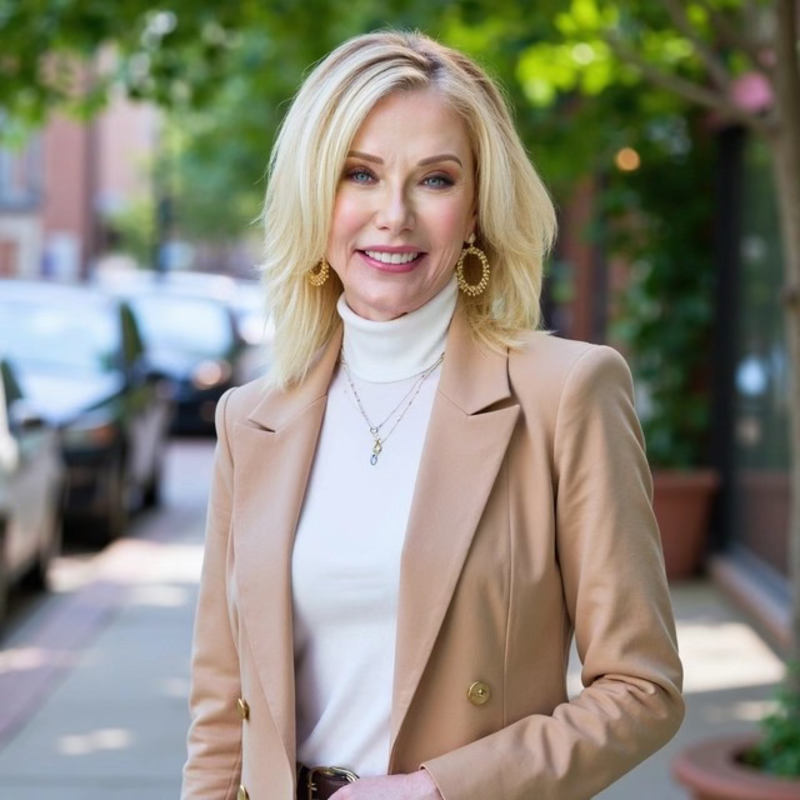
Episode 46
Have you ever had a boss who saw more in you than you saw in yourself — and pushed you to become it?
In Episode 46 of The People Success Circle, I sit down with Karen King, my former boss at McDonald's Corporation, to talk about the difference between personal power and positional power, and why building the former is what makes leaders unforgettable. Karen's 40-plus year career took her from 19-year-old crew member to Chief Field Officer, with 14 relocations and multiple "firsts" as a woman along the way. Keep reading for her hard-won lessons on mentorship, advocacy, and leading with influence instead of just title.
In this episode of The People Success Circle, I explore the following:
I trace Karen's path from 19-year-old crew member to Chief Field Officer, including 14 relocations across her career
I share the pivotal advice from a McDonald's US president that changed how Karen led: build personal power, not just positional power
I ask Karen how she negotiated her own advancement before saying yes to a stretch role — and why women especially need to speak their goals into truth
I talk with Karen about being a "first" in multiple roles at McDonald's, including being demoted during her pregnancy
I explore why Karen considers developing and advocating for talent the most meaningful part of her legacy
I discuss how her late husband Matt's support at home became the anchor that let her career thrive
I cover the role networking and saying yes to opportunities played in Karen's personal and professional growth
🎧 Tune in or keep reading to walk away with practical insights you can apply immediately—for yourself or the people you lead.
🔗 Helpful Links
💼 Karen King LinkedIn: http://linkedin.com/in/karen-king-b8876765
🌐 Mindy’s website for business consulting: https://www.limerockcareerco.com
🎧 Listen to the podcast on Spotify, Apple Podcasts
Episode 46: Watch or Listen
Key Takeaways From Episode 46
Personal Power vs. Positional Power: The Advice That Changed Karen's Career
Early in her career, Karen was offered a stretch role leading strategy for the entire U.S. business. When she hesitated, the McDonald's U.S. president asked her a simple question that reframed everything: "What's your career goal?" His answer to her answer has stuck with me ever since — he told her she was leading from positional power, and he needed to see her lead from personal power instead.
I still teach this distinction in my own workshop, Leading with Influence. You can lead because of your title, or you can lead because of the trust and respect you've earned. The leaders people actually remember are the ones who did the second.
Being the "First": What It Really Costs (and Builds)
Karen was the first female restaurant manager, supervisor, and consultant at McDonald's. Being a "first" sounds like an honor, but Karen was candid about what it actually meant — no built-in advocacy, a real pay gap, and in her case, being demoted while pregnant with her daughter.
What struck me most was her resilience. She didn't treat the demotion as an ending — she called it "the beginning" and came back to build one of the most accomplished careers in the company's history. It's a reminder that being first is rarely comfortable, but it's often how the door gets opened for everyone who comes next.
The Legacy That Matters Most: Developing People
Of every title Karen held — division president, Chief People Officer, Chief Field Officer — the accomplishment she's proudest of isn't a P&L number. It's the people she developed and advocated for. She shared a story about a young finance employee who once told her, "I want to be you one day." That employee is now the CEO of Whataburger.
It's a good gut check for any leader: when you look back on your career, will you remember the revenue, or the people you helped become who they are?
Support at Home and the Power of Networking
Karen was candid about how much her late husband Matt's support made her career possible — he was the anchor at home so she could travel, relocate, and lead. It's a reminder that behind most high-achieving women is a partner who chose to share in the success rather than compete with it.
We also talked about networking, which is where my own expertise comes in. My formula is simple: visibility plus relationships equals opportunity. For Karen, that meant saying yes — to panels, to speaking, to board seats. It's not about self-promotion. It's about staying visible enough that the right opportunities can find you.
🎧 Listen to the full episode of The People Success Circle for more practical insights and leadership strategies you can start applying right away.
Read the full transcript
Mindy: I'm so excited to introduce you, Karen, to my listeners. You and I have known each other since I was twenty-one years old, and I'm about to turn fifty-seven — so a long time. You are one of the people I have wanted to have on my podcast for a while, because I know so much about the impact you can have on people, and I'm excited for you to share it with us. So thank you for coming.
Karen King: It's a pleasure to be here, Mindy. Thanks for inviting me.
Mindy: Karen and I worked together at McDonald's Corporation, and Karen was my boss for quite a while. We did some great things together — special projects and more. I would love it if you could start out by walking us through a high-level overview of your career at McDonald's, because it is unique and so impressive. Tell us where you started and where you are now.
Karen King: I began my career in the restaurants as a crew member. Looking back, it's easy in an introductory role to think that's the ceiling — you don't necessarily see your own potential, or the advocacy you need to have for yourself, and more importantly, how mentors and colleagues advocate for you. I began my career in Lawrenceville, Georgia, in 1975, and I like to tell people — I follow the opportunities. I relocated 14 times with McDonald's, and I did that intentionally, because I knew each experience would develop my business acumen, my experience, my street cred, if you will.
I also think it's important for your listeners to know that not every move is a linear move. I started as crew, did the normal operations positions you'd expect, and then the stretch came when I took on a role I didn't necessarily have the expertise or education for — franchising, which involves a lot of legal work and understanding the franchise agreements every company has with its franchisees. That was certainly a stretch, and it led to positions with real managerial and leadership responsibility.
When I moved to the Greenville, South Carolina region, I wasn't just looking at a different geography — I was looking at a different team and a different team design. My first big move after operations happened when I moved to Tampa, Florida, as a multi-department director, and my first executive position was regional manager, which took me to Raleigh, North Carolina. One of the benefits of doing a good job is that you get tapped on the shoulder — during one of McDonald's many reorganizations, I was asked to go to Tampa and lead that region, which was the number one region in the country by revenue.
In most companies — and I can say this humbly — you want to match talent with the largest revenue generator if you can. The lesson I love to share is from when Mike Roberts had just become U.S. president. I was in Tampa, pulled out of a meeting, and Mike said, "I want you to come to Chicago and lead strategy for the whole business." I said, "Mike, why would I do that? I have the dream job here." And this was the best advice he ever gave me, through a question: "What's your career goal? What would you like to do?" I said I was happy where I was, but if I was really going to stretch myself, I'd like to be a division president. He said, "Karen, right now you're in a position of positional power. I need to see you in a role of personal power — I need to see if you're able to stretch the way you think about the business." That candor, which we don't always get from our bosses, stuck with me.
Mindy: I still talk about personal power and positional power that I learned from McDonald's — I have a workshop called Leading with Influence, and that's the crux of it. You can lead from position, or you can lead from personal power. I smiled when you said that, because it's one of the core lessons that helps so many people realize the influence they can have. Basically, what he was telling you is: we want to see you do more, and we want to see you exercise leadership in a different way.
Karen King: Imagine a boardroom full of A-type personalities, and being the only woman in the room, on the management team, at a very pivotal time when the company was struggling. This was the genesis of the Plan to Win. Being able to thread the needle across all the different functional departments at McDonald's to develop that plan — we rode that for years. It gave me agency, it gave me introductions to the board as we were bicycling the plan around. But one of the things I did that I think was clever, looking back, is I said to Mike, "Okay, I'll come lead strategy, and I'll tell you what — if I do this well, when the next division president position comes open, I expect that position." The outcome was negotiated up front.
Mindy: I love that so much — not just for everyone, but especially for women, to be able to say, "I will sacrifice, I will move my family, and I have a vision beyond this, and I'm going to speak it into truth."
Karen King: And that's exactly what happened. I was in the strategy role for about three years, then became East Division president. If you know the geography of the East, it was the largest generator of revenue for the company and had the largest number of restaurants. It gave me exposure to analyst and investor days — it was like an MBA education, beyond just running a very good division.
After several years in that role, I retired — and was retired for nine months. Then there was a leadership change at the U.S. level, and I got a call asking me to come back. I came back as Chief People Officer, stepping down from an EVP division president title, because what I was known for was developing and exporting talent. A lot of people wanted to work for me because they knew I'd be personally invested in their career and their development. Of everything in my long career, the work I did developing talent is what I'm most proud of.
Mindy: You should be, because I've seen it firsthand — you've touched so many people's lives and helped them stretch themselves. When I look at the influence you had on me, I think you saw more in me than I ever thought was possible, and you always pushed me. You are a tough boss sometimes, because you push people to be their best. I didn't come from a family with big expectations for my career — I was a first-generation college student. One of the things you helped me with was seeing what a career could actually look like, because I'd never been exposed to it. It was really special.
Karen King: Mentorship is a long game — you're playing the long game. There's a woman named Melody Hopson — I was on a panel with her at a leadership conference, and she said something I'll never forget: "When you've worked hard and done well and walked through that door of opportunity, don't slam the door shut. Reach back behind you and take those women with you." I think that's important regardless of whether you're male or female — we all stand on the shoulders of the leaders who came before us.
Mindy: I want to dig a little deeper on something — you hadn't had a role specifically in human resources before you became Chief People Officer. I think that says so much about the impact you had — your investment in people was so well known that they essentially said, can we take that out of operations and let everyone share in it? It's not that common to put someone in a chief people officer role without those technical HR years and understanding of labor law, even though you got some of that in operations. To be recognized and pulled out of retirement for your legacy of developing people is a pretty great testimony.
Karen King: Thank you for that. I did have the technical HR talent around me for those pieces. But I think the credential of being an operations person with a track record of people development — that's not theoretical, that's not just sitting down and doing the nine-boxes. It's really asking the right questions about a person's potential if it's nurtured. Sometimes that means an executive coach, or that truth-teller we all need in our careers who tells us our derailers and our blind spots. I remember working with Harvard to build an executive development program — McDonald's had never done that before, and it was all a shoestring effort at first.
Back in the day, about 40 percent of our executives came up through the ranks. It's a much more difficult business dynamic today, with different macroeconomics and a different global perspective. But I don't care what business it is — it's still a people business.
Then when Steve Easterbrook became CEO, I was asked to become Chief Field Officer, which was effectively a COO role. I had oversight of the entire U.S. business with the exception of marketing and product development — every other department reported to me.
Mindy: And were you the first female to hold that role?
Karen King: Yes. I was the first female restaurant manager, the first female supervisor, the first female consultant. And when you're a "first," there's no advocacy built in — there's no one who's walked that road for you. It used to be that women made 62 cents for every dollar a man made. Maybe it's 72 cents now. Maybe the bias isn't as overt anymore, it's more covert, but it's still there.
Here's a bit of history that will make your women listeners do a double take: when I became pregnant with my daughter, I was actually demoted, because I was, as they put it, "in a delicate way."
Mindy: I did not know this. Wow.
Karen King: When I share that story in mentorship conversations, it speaks to resilience — yes, I was demoted, but that wasn't the end, that was just the beginning. The gauntlet had been thrown down. I did come back from maternity leave, I did well in my career, I thrived. I always say you can do it all, just not all at the same time — and having a good support system let me take advantage of opportunities as they came. But being the first, there's no roadmap.
Mindy: I did not know you were the first female restaurant manager either — I don't think we ever talked about that specifically. I'm very passionate about supporting and elevating women right now, so this conversation is especially timely. I recently had the pleasure of hearing Allison Felix speak — she's the most decorated track Olympian in U.S. history, and she ran for Nike. When she got pregnant, they significantly reduced her contract, and she actually hid her pregnancy, training at night so people wouldn't see. And this isn't that long ago. The good part of her story is that she and other athletes wrote an op-ed for the New York Times calling out companies for discriminatory treatment of female athletes, and they did get the change they were asking for. But that's happening today — and you dealt with something similar so long ago.
I think it's worth noting the age you started at — nineteen, working in the restaurants. I think that's part of what made people so credible at McDonald's back then: you knew what it was like to clean the parking lot, to make fries for five hours, all of it. You paid your dues, and McDonald's was a company that rewarded results and rewarded being in the trenches.
Karen King: That's exactly right. We're a restaurant business, and I still say "we" — I'm very much a fan of this company, which has been so good to me. I don't underestimate my contribution to the company's results, but when I think back, I don't think about my P&L, my revenue numbers. I believe the best contribution any leader can make — myself included — is advocacy for the talent they're responsible for. We all have an obligation there. We've all worked for bosses we say, "I want to be like them, they inspire me" — and we've also worked for bosses where we say, "I will never be that person if I'm ever in that position of responsibility." It cuts both ways.
Mindy: Going back to your role as Chief People Officer — I have a college degree, but I've always felt my real education in operations, leadership, and human resources came from McDonald's. It was such a good development company. It doesn't matter that our chief people officer has an HR certification — what matters is that she develops people well and has a track record of it. It's a testimony to how much the company developed us. It felt like a firehose of learning every day, but it was also so much fun. I don't know if you remember this, but I was young, working under you in Atlanta, opening a facility in August — we were all melting. You walked in wearing Christmas socks and said, "It may be hot, but we're going to think cold and have fun." You always had this ability to balance intense learning with, "How are we going to have fun while we do it?" We have some fun stories about cleaning the play place and all the rest. But it really showed me what a well-rounded leader looks like — you cared about people beyond the numbers. Leadership isn't just teaching the P&L statement or how to rotate product so the freshest is used first — it's about caring about your people. I think that empathetic, personal style of leadership goes such a long way.
Karen King: I'd describe that another way — it's about authenticity. In the McDonald's experience, everything you do communicates. Even at my last position, number two in the U.S. company, when I visited a restaurant I started in the kitchen, thanking every one of the employees, because that's the heart of the business. I wanted the franchisees and my staff to understand what was important to me — if the restaurant is humming, we're taking care of our customers.
Do you remember Debbie Stroud? She's now CEO of Whataburger. She came to see me the September before it was announced that she'd become CEO, and she asked, "Do you remember?" I said, "Tell me what?" She reminded me that she was my finance person, and we were in a restaurant kitchen together, and I was explaining what I look for in a well-run operation. She said to me, "I want to be you one day," and I told her, "Well, Debbie, then you need to learn how to make a cheeseburger." When she came back and told me that story, it reminded me of the impact you can have on people in such a good way — I didn't even remember saying it, but it sounded like me.
Mindy: Even as a human resources consultant, back in my Tampa days, before I was released to do my HR job, I worked a month in the stores — drove out to Plant City, worked night shifts, weekend shifts, grill shifts, all of it — because understanding what it takes to do any job in the organization, especially the ones that interact with customers, makes you a better leader. Debbie's done really well.
Karen King: She has. She's developed her own team of wonderful female leaders — she'd actually be a great guest for your podcast. I'll write her a note and encourage her to come on.
Mindy: I would love that. I want to talk to you about motherhood and being a wife while you moved 14 times. I've had the pleasure of knowing your daughter and your husband for many years. I know it takes a village to help a woman be successful while balancing motherhood. Your husband Matt passed away almost six years ago and was a legend. One of the things I loved most about Matt was watching him support you in your career. Talk to me about what that support looked like, and how spouses can support their partner through a career journey like yours.
Karen King: Thank you for remembering that — that meant a lot. What was really hard was my first relocation, as a single mom with a six-year-old. If I hadn't had support — I don't know if you recall Art Alamo, his wife was my babysitter when I first moved to Florida, because I was working unpredictable hours. Having that support system, or being painfully aware when you don't have it, is a huge distraction, because you want to be very good at your job — but our most important job, at the end of the day, is being a good mother.
When I met the love of my life and married Matt and moved to Atlanta, my career was skyrocketing, and Matt was the anchor, because he didn't travel. If there was a school pickup or something that needed a parent there, he was there. Did I miss things? Yes — when my daughter Kathleen was doing college searches, it was Matt driving her all across the country. Beyond when my daughter reached adulthood, I'd leave Mondays, come back Thursdays, leave Tuesdays, come back Fridays — and I'd come home to a clean home, folded laundry, loving notes saying "glad you're home," dinner in the fridge.
I remember being on stage at a McDonald's convention with the lights blaring, and after Matt passed away, so many people shared condolences, but they also shared how much charisma and presence he had — he made you feel like you were the most important person in the room. They told me about the look of pride on his face when he watched me speak. He shared in my success — he relished it. It's not a competition. I know a lot of women executives at McDonald's whose husbands stayed home and raised the children while their careers took off — Debbie Stroud's husband Bob did, Karen Garcia's husband did too.
Mindy: I love hearing that, because it was so foreign for a long time to think a woman's career would be elevated that way — and we still have a long way to go. When you have somebody beside you cheering you on and helping, you have the perfect combination for success. I found that in my husband too, and I credit you and Matt as an example, because there's literally nothing my husband won't do to support my career. I'm thankful I waited to get married until I was thirty-eight, because I had great examples of spouses supporting their wives, so I knew what was possible for me.
Karen King: That's a very good point. We were both very blessed — you with Andy, and me with Matt.
Mindy: Your daughter works for McDonald's now too, right?
Karen King: She just celebrated 15 years at McDonald's, and I'm very proud of her — she's very good at what she does.
Mindy: I believe it — she's always been a hard worker with great role models. Karen, you probably know I speak a lot on networking. For me, networking has been instrumental in my career in the corporate world and in building relationships. To me, networking is all about building authentic relationships and keeping them alive — it's a mutually rewarding relationship, not pitching. It's relational. As I interview guests on the podcast, I love to get their take on how networking has helped their career.
Karen King: One of the early things McDonald's did in terms of embracing diversity groups was the Women Operators Network, which at the time was still fairly small, and then the corporate Women's Leadership Network. It created a very safe harbor for women to be vulnerable and share life lessons, career lessons — what you'd tell your younger self if you had to do it all over again. I think it's a pivotal moment for any leader to understand the value of networking. Sometimes you can get into a heads-down mindset, and there's a time for that, but if you really want to invest in and nurture your career, the best learning you can get is being around other people who set an example. It didn't fully occur to me until I left McDonald's and became a board member, mentoring women and other leaders, just how valuable networking is. And it's not just LinkedIn — it's saying yes. Saying yes to the local NACD chapter when they ask you to speak on a topic, saying yes to the Stanford Directors College to give a point of view on the hospitality industry as a board member, saying yes to a summit on artificial intelligence, which I did just this past Friday, on a panel. You have to say yes to these opportunities — it's not just for your own development, it's what you share with others. We have a responsibility and an obligation to do that.
Mindy: We absolutely do. The formula I talk about for modern-day networking always includes both in-person and virtual networking, using things like LinkedIn. LinkedIn helps me stay top of mind and message people in my network, but in-person networking is equally important. The formula is: visibility plus relationships equals opportunity. Saying yes to sharing your knowledge in a group setting, or being on a panel — that's networking, because it increases your visibility, and more people see you as the subject matter expert. When you're seen that way, it can only help grow your career.
Karen King: That is very sage advice for your listeners.
Mindy: That's what I built my whole networking school around. I've always trained on human resources and leadership, but it wasn't until I became a business owner that women around me — I'm active on the board of the National Association of Women Business Owners, and our San Antonio chapter is the largest and was just ranked chapter of the year, with almost 240 entrepreneurial women in our program — started coming to me and saying, "Would you come share how you network? We're seeing something in you that we aren't doing." I spoke at a lunch and learn for about 25 women, and the next month they asked me to give a networking talk at their big monthly luncheon, because people really resonated with it — they hadn't thought about networking the way I was describing it. I hadn't created these presentations ahead of time; I created them because people asked for them.
A couple of people posted about it on LinkedIn, including me — I was new in the organization at the time — and my husband's boss's daughter, who lived in D.C. and whom I hadn't seen since she was twelve, saw the post while she was in a conference planning meeting looking for a networking speaker. She asked what my rate was, and I said, "I've never been a paid speaker" — this was something I'd created because people saw something in me. Now my signature talk is called Networking in a Hyper-Connected World, and it's by far my most requested talk. You go where people see something in you, and that's how I ended up talking about networking so much. It really ties into everything — we recruit better when we network, we have more opportunity within companies when we have relationships and visibility, and people know what we can do. I see it as a business strategy, not just a career strategy.
Karen King: Well said — it's a personal and professional development strategy.
Mindy: It really is. I've loved evolving into a networking expert — that wasn't my intention, but it's really stuck. I have a networking school now with almost 70 members, and I still train on HR and leadership too, but my most requested talk goes across every industry, because we all need to figure out how to be visible and known in this crazy world we're in.
Karen King: Especially now, when relationships can get shortened — whether it's AI, or offices deciding they don't need the overhead of G&A and just having everyone work from home, which I think is going to come home to roost. When you think about cultural development, professional development, mentorship — what you're describing, if we can thread that needle in a bigger way, doesn't just benefit employees, it benefits the company.
Mindy: It's interesting you say that — now I'm thinking I should do a whole episode on networking if you work from home, because a lot of people who work from home think they get a pass on being out and talking to people, but it's probably even more important for them to know how to stay visible and build relationships.
Karen King: I think a good topic — based on my conference on Friday — is the uncertainty and fear around agentic AI and how it impacts people's future careers. You're hearing college students booing commencement speakers over it. When you hear that agents will be talking to agents, the question becomes whether there's still a human in the loop. That's worth probing as a topic. It's not a technology question, it's a business transformation question — how do we fit into that?
Mindy: That's a good way to put it. That transformation is going to happen whether we're on board or not, but we still need the human side — and that's where networking comes in.
Karen King: No question. Amy Diamond was quoted saying AI isn't going to replace jobs, but employees are expected to understand how to use it as a productivity tool — and it still comes down to personal relationships.
Mindy: I couldn't agree more. I use it as a productivity tool every day. But people are also talking about business owners using it to replace employees, and I can't imagine a world where it's just me and AI all day. Maybe I'd save money, but it wouldn't help me do my best work — I need people.
Mindy: Well, thank you so much for taking the time. I know you have a busy schedule between boards and your church, so I know your time is valuable, and I thank you so much for sharing with us today.
Karen King: It's a pleasure to be here, Mindy. Thank you very much for having me.
