How to Adapt, Stay Visible, and Build a Career You Love with Alexis King
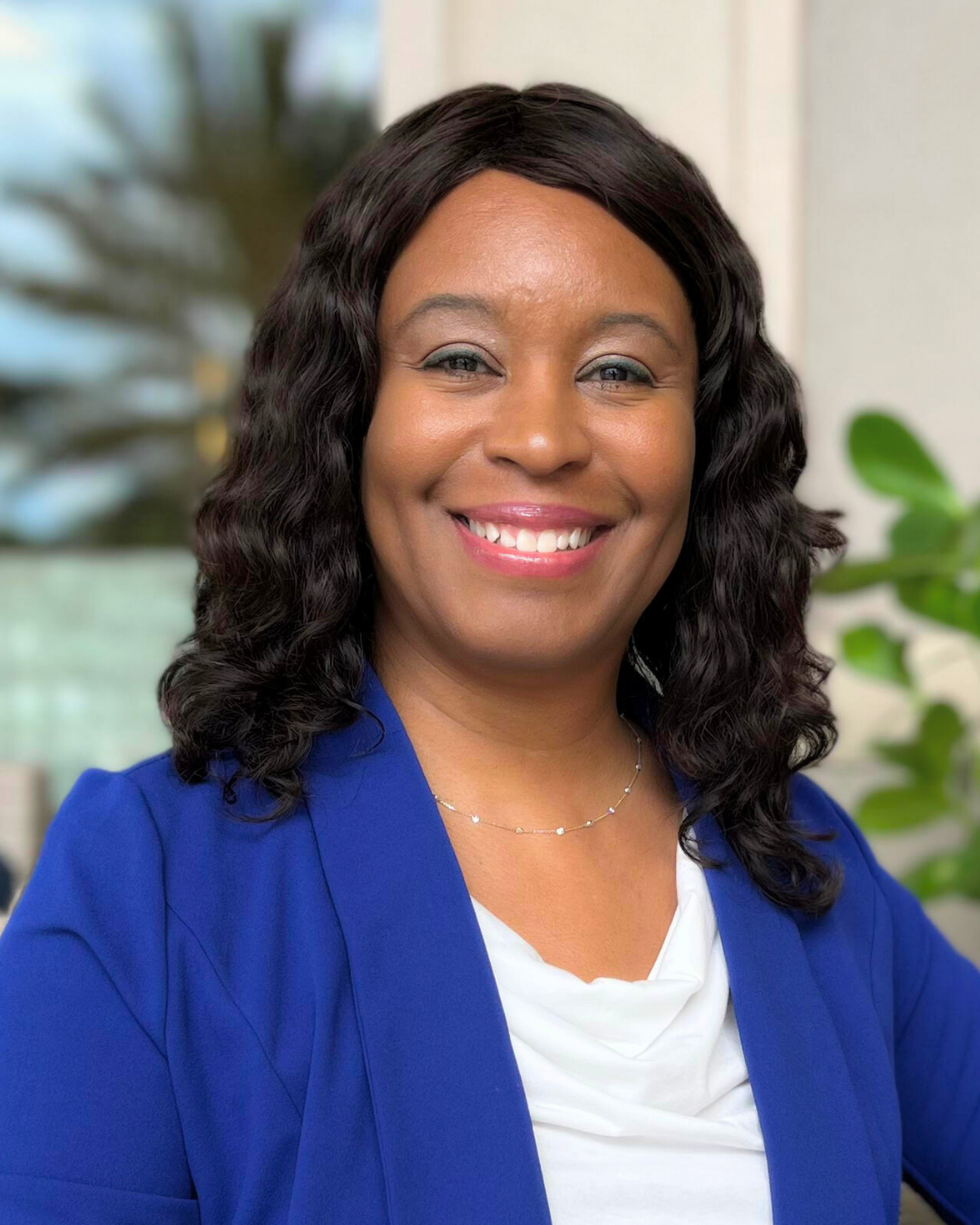
Episode 47
Are you waiting for your career to move forward, or are you actively making it happen?
In Episode 47 of The People Success Circle, I sit down with keynote speaker and author Alexis King to talk about career transition — from her own path through banking, tech, and entrepreneurship, to the framework she now teaches in her book, The Career Ninja Mindset. Alexis shares practical career transition tips for staying relevant, building multiple income streams, and becoming unignorable at work, whether you want to grow where you are or take your career in a new direction. Keep reading for the highlights.
In this episode of The People Success Circle, I explore the following:
I trace Alexis's career journey from bank teller to LinkedIn Learning, and the pivotal 2012 layoff that changed everything
I ask Alexis how a great coach helped her uncover what she actually loved doing, instead of just moving on to "bank number four"
I cover why LinkedIn is still one of the most underutilized tools for career transition tips and professional visibility
I dig into how Alexis built a real estate investment business during the pandemic, and what that taught her about multiple income streams
I ask why you don't have to quit your job to start something on the side, and what "ruthless prioritization" actually looks like
I break down the five P's framework from The Career Ninja Mindset: Plan, Prioritize, Practice, Persistence, and Passion
I explore what it means to become unignorable at work, and why visibility plus relationships is the real formula for opportunity
🎧 Tune in or keep reading to walk away with practical insights you can apply immediately—for yourself or the people you lead.
🔗 Helpful Links
🌐 Alexis King Website: alexiskingconsulting.com
💼 Book: The Career Ninja Mindset
🌐 Mindy’s website for business consulting: https://www.limerockcareerco.com
🎧 Listen to the podcast on Spotify, Apple Podcasts
Episode 47: Watch or Listen
Key Takeaways From Episode 47
A Layoff Doesn't Have to Be a Setback — It Can Be a Reset
When Alexis was laid off from banking in 2012, her instinct was to do what she'd always done: move to the next bank and repeat the same role. Instead, a coach asked her tough questions — what did she like doing most, what did she like least — and she uncovered that what she actually loved was learning and development, not banking itself.
I love this because it's a reminder that a layoff, or any unexpected career disruption, is a real opportunity to ask what you actually want instead of just defaulting to the familiar path.
The Five P's: A Simple Framework for Career Transition
Alexis's book breaks career growth into five P's: Plan, Prioritize, Practice, Persistence, and Passion. Planning doesn't have to mean a rigid five-year roadmap — it can be as simple as a 30- or 90-day direction. Prioritizing is what she calls "ruthless prioritization": do the thing you like least first, so it stops draining your energy in the background. Practice means staying sharp on your skills, since what got you your current role won't necessarily keep you there. Persistence matters because things rarely move as fast as we want them to in an instant-gratification world. And Passion means picking pursuits you're actually excited about — chasing a credential just because it's trendy shows, and it shows in your results.
Of the five, Alexis says persistence is where most professionals struggle most, simply because our expectations for how fast things "should" happen have shifted so dramatically.
You Don't Need to Quit Your Job to Build Something New
Alexis's real estate business started almost by accident during the pandemic — a quarantine getaway turned into buying a cabin, which turned into an Airbnb business, which turned into a real investment portfolio. Her advice for anyone with a full-time job who wants to explore something new: you don't need another 40-hour-a-week commitment. Even 20 hours a month, blocked out intentionally, is enough to plant the seed and see where it goes.
Become Unignorable: Why Visibility Is a Career Strategy
Alexis's phrase "become unignorable at work" is about making sure your wins are actually seen, not just assuming your manager already knows what you've contributed. It ties directly into the formula I teach in my own networking work: visibility plus relationships equals opportunity. You can have great relationships and still be overlooked without visibility, or have visibility without the trust that real relationships build. Either way, you don't want to be the best-kept secret on your team.
🎧 Listen to the full episode of The People Success Circle for more practical insights and leadership strategies you can start applying right away.
Read the full transcript
Mindy: Welcome to this week's episode of the People Success Circle podcast. I'm very excited to have my colleague with me. Her name is Alexis King, and Alexis is someone I met through a speaker program. We're both fellow keynote speakers, and after getting to know her work a little, I knew I needed her to be on my podcast so she could share her wealth of knowledge with all of you. So with that, welcome, Alexis.
Alexis King: Thank you so much. So good to be here, Mindy. I'm excited.
Mindy: Me too. We met over a virtual program, and anytime we can spend extra time learning about someone's background, I think it makes us all better. So thank you for being here. I want to start by learning more about your career journey and what you're doing today, because what I've known about you in the short time we've known each other is that you're a woman who wears many hats. I'd love for you to unpack that for us.
Alexis King: Certainly. I actually started my career in banking and finance and insurance — more than fifteen years in banking, a few different big banks, three or four years at each. That's how you moved up back then; we're definitely going way back, and some of those banks don't even exist anymore, they've been taken over by mergers. It was a great experience, and I learned a lot about myself, what I enjoyed doing and what I didn't. I moved up over the years from literally a teller in college to branch management, to leadership, and then I ended up as a corporate trainer for the bank, traveling to different branches and working with the teams — that was the most fun role I had in banking.
But when you're in banking, you have to expect layoffs, which is exactly what happened. The bank made a change and decided to eliminate that training role — 650 of us across North America were let go. It wasn't personal. And at the time, I happened to be working with a career coach — I'd met her at a wedding two years earlier, in the same bridal party, and I remember thinking when she told me she was an executive and life coach, "That's not even a real thing, do people actually pay you for this?" But once I got laid off, I called her, and she asked, "Are you calling me just to vent, or do you really want help unpacking some things?" I said, "I need all of your services."
That was 2012. She asked me really tough questions — out of all the jobs I'd had, what did I like doing the most, what did I like the least, and where could we find a job that was more of that. Because my pattern had been to just go to the next bank and repeat the same role. There was a good chance I would have gone to bank number four and done something similar without really being fulfilled. What I uncovered instead was that I loved learning and development — training, and helping people grow. So I became an independent corporate trainer, traveling around doing three- and four-day seminars on professional selling skills, customer service, and leadership for organizations like Franklin Covey. That gave me exposure to a lot of different industries — biomed, pharmaceuticals, investment firms, even two of the largest phone companies in the U.S.
Mindy: I can see why you enjoyed that — it seems like the thread that's continued through your career changes.
Alexis King: Yes, I did that for a couple of years, and then I got a call: someone found me on LinkedIn and was looking for someone with my background to be the sales trainer for North America at a large international company. That felt like an excellent opportunity, so I went back into corporate as their on-site learning and development sales trainer. It was another great networking opportunity, and I learned a lot about how things had changed between 2012 and 2016, 2017.
Mindy: I love that you said someone found you on LinkedIn, because I feel like it's still so underutilized by job seekers. That your profile was attractive enough for someone to reach out to you is so key.
Alexis King: It really does work — because two years later, someone else found me on LinkedIn with another offer, and this one got me into tech, which was very foreign to me after being in banking and independent training for so long. I remember thinking, "I don't know anything, I'm not even on social media, this isn't my world." This was 2018. Even my family was laughing — "You're not even on Facebook, how are you going to work at a tech company?" But that's also when I started to understand the concepts I now write about in my book, and the skills I needed to adapt to a new world.
I had to be very humble. I felt like the oldest person on the floor, because so many people in tech were younger than me. The whole vibe was different — less conservative, everyone dressed differently. I didn't even know the lingo. "Biz dev" meant business development — nobody said that in banking, you just went and got the customers, cross-sold, upsold. And "MVP" meant minimum viable product, not "most valuable player." By asking a lot of questions and allowing myself to be humble, within about a year I became the subject matter expert — leadership started reaching out asking me to help train new people, I created a monthly newsletter for our department sharing what I'd learned. That put me in the spotlight and changed the trajectory of my career — I was promoted into leadership, and great things happened.
Mindy: So you took a lot of initiative, staying on top of what was happening in the department and the company, and then took it further by sharing that with other people.
Alexis King: Yes, that made a real difference. And I do like to share.
Mindy: Me too. Is that where you're still working today?
Alexis King: Correct — I've been with this company for eight years now.
Mindy: Can you say where you work?
Alexis King: I can. I currently work for LinkedIn — they're the ones who called and said they had a role for me on the learning and development team for LinkedIn Learning. I thought, that sounds perfect, I love learning, I love sharing, so I fit in here. It was almost overwhelming at first, but people really like the platform.
Mindy: What a great team to be part of — LinkedIn Learning is such a valuable resource. Let's talk about what you do in addition to your corporate job, because that's actually how we met — learning how to be keynote speakers. I'd love to hear about the entrepreneurial side of your career.
Alexis King: What got me thinking about being a keynote speaker and coach was starting a real estate business on the side during the pandemic. My cousin and I bought some properties in the mountains — about two hours north of New York City, in the Pennsylvania mountains and upstate New York — and became business partners. We bought four houses and started doing Airbnb, and I learned all about real estate and got more and more involved, doing more advanced deals, going to real estate conferences. That started my entrepreneurship — I became a landlord, an investor, had to set up a separate LLC and learn to operate a real estate investment business.
It was going really well, and people started telling me, "You should do coaching, you should lean into real estate, you could tell your story." I thought, if I'm going to do this, I want to do it right, so I wanted to get organized — and that's how you and I met, at that speaker training program, which really helped me build the foundation for what it means to be a speaker and do it properly. That's been going great and feeds into my entrepreneurial journey and everything else I get involved in.
Mindy: I want to ask one more entrepreneur question before we get to your book. Why do you think it's so important to have that entrepreneurial side alongside a steady corporate job? And what advice would you give someone with a full-time job who wants to explore a business idea?
Alexis King: One of the main things these days is I believe in multiple streams of income. You have to set yourself up for success, and what that looks like will be different for everyone. What matters is finding out what you're interested in. I fell into real estate — it wasn't something I'd planned. It came from a conversation about renting a cabin for a quarantine getaway, and we thought, why not just buy the house instead and use it as our vacation spot? That went so well that three months later we were buying others.
You don't always know ahead of time, but you have to be open to new ideas. Once I did that, I realized I could be open to other things too. So for anyone interested: figure out what you're good at, what people would pay you for, or what people already pay others for that you're not even asking for. That could mean joining a business that already exists, doing something on the side, doing something you enjoy. There's no wrong way to do it, except to stay the same. You could start making purses out of scrap fabric from your closet and become an internet sensation — there are endless ways to do this.
Mindy: There really are endless ideas for starting a business. Okay — so let's talk about your book. Your book is called The Career Ninja Mindset. That's such a distinctive name — tell me where it came from and a bit about the book.
Alexis King: The name came from that same speaking course we were in. We were doing introductions with other speakers, and I was telling my story — how I'd changed careers from banking to corporate training to learning and development to tech to real estate to coaching and speaking. Someone said to me, "You're a ninja — you're like a transition ninja." I thought that was pretty cool, and pretty accurate, and it led to the name of the book and how I structured it — around focus, adaptability, flexibility, and being prepared. Those are the things ninjas do to be ready for the unexpected, which is how you have to live in corporate America these days. And "unexpected" doesn't always mean disaster or being laid off — it can mean other people are laid off and you're staying, but now you have new responsibilities, or you're suddenly reporting to someone new. There are constant changes that impact you, and you have to be ready to adapt quickly to stay at your peak productivity.
Mindy: I honestly didn't know the story behind the name, but that's so true for people in the workplace, whether they're in corporate, education, or anywhere else — the one thing we can all expect is change. I can't think of an industry that's free from it, whether it's AI, layoffs, new bosses, or shifting responsibilities. So tell me about the framework in your book.
Alexis King: It's the five P's of success: Plan, Prioritize, Practice, Persistence, and Passion.
Planning is simply having a direction — where do you want to go, what do you want to do. It sounds simple, but a lot of people just wait for something to fall in their lap instead of sitting down and actually thinking about it.
Mindy: We used to say, if you don't plan your own career, someone will plan it for you.
Alexis King: Right — or the classic line, if you don't know where you're going, you'll certainly never get there.
Mindy: That's right — I use that a lot too, because it applies to business owners and career-minded people alike. If you don't know where you're going, you're never going to get there, and what a waste of time.
Alexis King: And you can chunk it down — a plan doesn't have to be a one-, three-, five-, or ten-year plan. It can be a plan for the next 30 or 90 days, just to get you started or keep you moving forward.
Mindy: I was just talking with a group of women entrepreneurs in a book study about this — in the corporate world we used to say you should have a one-, three-, five-year plan, but even a year ago, with how fast AI is changing things, that kind of long-range plan would already be out the window. There's value in chunking it down and staying open to change rather than banking everything on something three to five years out.
Alexis King: You have to be your own biggest advocate — no one's going to do it for you. People still expect their manager to plan their career for them, which is strange. You have to tell your leader where you want to go and ask for their ideas and guidance, but they're not going to do it all for you.
Mindy: Okay, so that's Plan. What's next?
Alexis King: Prioritize — what I called ruthless prioritization earlier. A simple example, from Brian Tracy's Eat the Frog: do the one thing you like doing least first, because once it's out of the way, you're free to do everything else. That applies personally and professionally. If you have a report due every Tuesday and you keep putting it off, it weighs on you all week — you're stressed on Monday because you still haven't done Tuesday's report. But if you knock it out first thing, the rest of your time opens up. It's the same at home — if you're having guests over and you keep avoiding cleaning the bathroom, doing everything else first, you end up exhausted and cleaning it at 11 p.m. the night before. Ruthless prioritization isn't about doing what you like — it's about doing what needs to get done, first.
Mindy: That's great advice. What's next?
Alexis King: Practice — a fancy way of saying sharpen your skills, always be learning and improving. Now more than ever, things change quickly. Whatever skills got you the job you have now, or whatever you were measured on in last year's performance review, could be different this year. You need to stay on top of what's happening in your field, no matter the industry — even fast food is changing in how it does business. Make time for it, even if it's just watching a podcast.
Mindy: I don't do one-on-one career consulting anymore, but I can't stress enough how important it is to stay relevant on skills. I was talking to my brother yesterday about updating his LinkedIn profile, and he asked if it really mattered at his age. I told him it matters more at his age than he could imagine. There's no industry exempt from change, and there are so many free ways to build skills now — Stanford, IBM, Google all offer free training.
Alexis King: So many free courses across so many industries.
Next is Persistence, because it's important to remind people that things may not happen on your timetable — even getting promoted doesn't happen as quickly now as it did just a few years ago. The whole process is different, companies are getting flatter and not necessarily looking for more leadership layers, so sometimes you need to go horizontal to eventually get higher. It takes persistence and patience, because what got you here won't necessarily get you ahead.
Mindy: I'd say the same is true for external hiring — the hiring timeline keeps getting longer, which is frustrating given all the technology that's supposed to be helping.
Alexis King: It's very competitive out there. The economy has changed, which impacts hiring — companies can be more selective now, with a larger pool of candidates who have similar skills, and everyone says they're already fantastic with twenty years of experience. It just doesn't work like that anymore.
Mindy: No — we live in a recognition economy now, not just a reputation economy. Degrees and certifications are credible, but visibility, networking, and relationships are really what speed up the job process.
Alexis King: And finally, Passion — not passion as in "just go do whatever makes you happiest," but passion as in you need to actually enjoy what you do. If you're looking externally or picking up a side job, it needs to be something you're genuinely interested in and confident doing. There's no point chasing a PMI certification just because everyone says program managers are in demand if it's not something you actually care about — that shows in your work, and then people wonder why they're not getting promoted.
Mindy: A hundred percent. Of the five P's, which one do you think most professionals struggle with the most?
Alexis King: I'd say Persistence, because we're in an instant-gratification society now. Our expectations for how long things take have changed. A generation ago, the expectation might have been five or ten years to get promoted — now people expect it in ten months. That's where people struggle most.
Mindy: I think you're right. Technology has changed how fast we expect things to happen, but I don't think we want to go back to the days when promotions took five to ten years either. Still, having the persistence to see something through and build relationships long-term really impacts a career. I love how you use the phrase "become unignorable at work" in your book — tell me more about that.
Alexis King: That's about visibility — making sure your voice is heard. A lot of us, for different reasons, whether cultural or just our comfort level, don't share our wins and successes enough for the people watching to realize we're the best person for a new role, a project lead position, or to step up when someone's on vacation. It's not about raising your hand aggressively — it's about calling out the things you do that add value, and building up your internal reputation. The career ninja mindset isn't about changing jobs — it can absolutely help you in a transition, but you don't have to leave your company to be successful. You can stay right where you are and use these ideas to stay happy and get the highest performance review, the highest bonus or raise, and stay ten or fifteen years if that's what makes you happy. What matters is being unignorable — being seen and heard for the value you add, even if it doesn't lead to a promotion.
Mindy: Yes, I love that. In the world of networking, I always say visibility plus relationships equals opportunity. You can have great relationships but no visibility and be out of sight, out of mind — or have visibility without relationships and no trust. What you're describing applies directly to that. You don't want to be the best-kept secret on your team. We live in such a busy world, you can't assume your boss already knows what you're doing.
Alexis King: Right — they're overwhelmed with everything else going on in the organization, and they're just not as focused on you as you might want them to be.
Mindy: Exactly, which is why it takes initiative. I'm looking forward to reading your book, and I'm going to buy it for my brother. As we near the end of the episode, if a listener only wants to do one thing differently, what's the most important takeaway from this conversation?
Alexis King: I'd say lean in and have a conversation with the right person who can help you understand more — not necessarily to get ahead immediately, but to understand yourself better and where your areas of opportunity are. If you already know what you want to work on, go seek out the people who can help. Is it a skill you need to improve? Go have that conversation. Is it leadership? Go have that conversation. Not sure which direction to go, but curious about a particular team? Go talk to someone in that department and learn how it works, both internally and externally.
Mindy: I love that — assess where you are now, and focus on one thing you could do to develop yourself. Thank you so much, Alexis, for taking the time out of your busy schedule to be with us today. I love helping people with their careers, and I know you do too, because in our seats — HR, training and development — we get an inside look at how things really work in companies. Thank you for sharing your perspective with us.
Alexis King: It's been my pleasure. Thank you so much for inviting me.
Mindy: I hope you enjoyed this week's episode of The People Success Circle podcast. Please share it with a friend, leave a review, or hit subscribe. You can check the show notes for information on purchasing Alexis's book and learning more about hiring her for speaking opportunities. I'll see you on the next episode of The People Success Circle podcast.
